A lot of small businesses assume their website is underperforming because not enough people are visiting it.
Sometimes that is true. But often, the real problem is not traffic. It is messaging.
People may be landing on your site, scrolling for a few seconds, and leaving without taking action because they cannot quickly understand what you do, who it is for, or why they should choose you.
More traffic does not fix a message people do not understand.
If the message is unclear, more visitors simply means more people arriving, getting confused, and moving on. Before investing more into traffic, make sure the people already finding you have a reason to stay.
Your website has a few seconds to make the point.
Most visitors are not studying your website line by line. They are scanning. They want to know whether they are in the right place and whether your business can help with what they need.
That means your first message needs to do more than sound polished. It needs to be useful.
A strong homepage should quickly answer the questions people are already asking in their heads: What do you do? Who is it for? Why does it matter? And what should I do next?
What a messaging problem usually looks like
The headline sounds good but says very little.
Visitors see broad language like “quality,” “innovation,” or “solutions,” but they still do not know what the business actually offers.
The business talks about itself before the customer.
The copy focuses on history, credentials, or internal details before making the customer’s need feel understood.
Services are listed, but not positioned.
People can see what is available, but not why one option is right for them or what result they can expect.
The next step is unclear.
Visitors are interested, but the page does not give them a clear path to buy, book, order, call, or reach out.
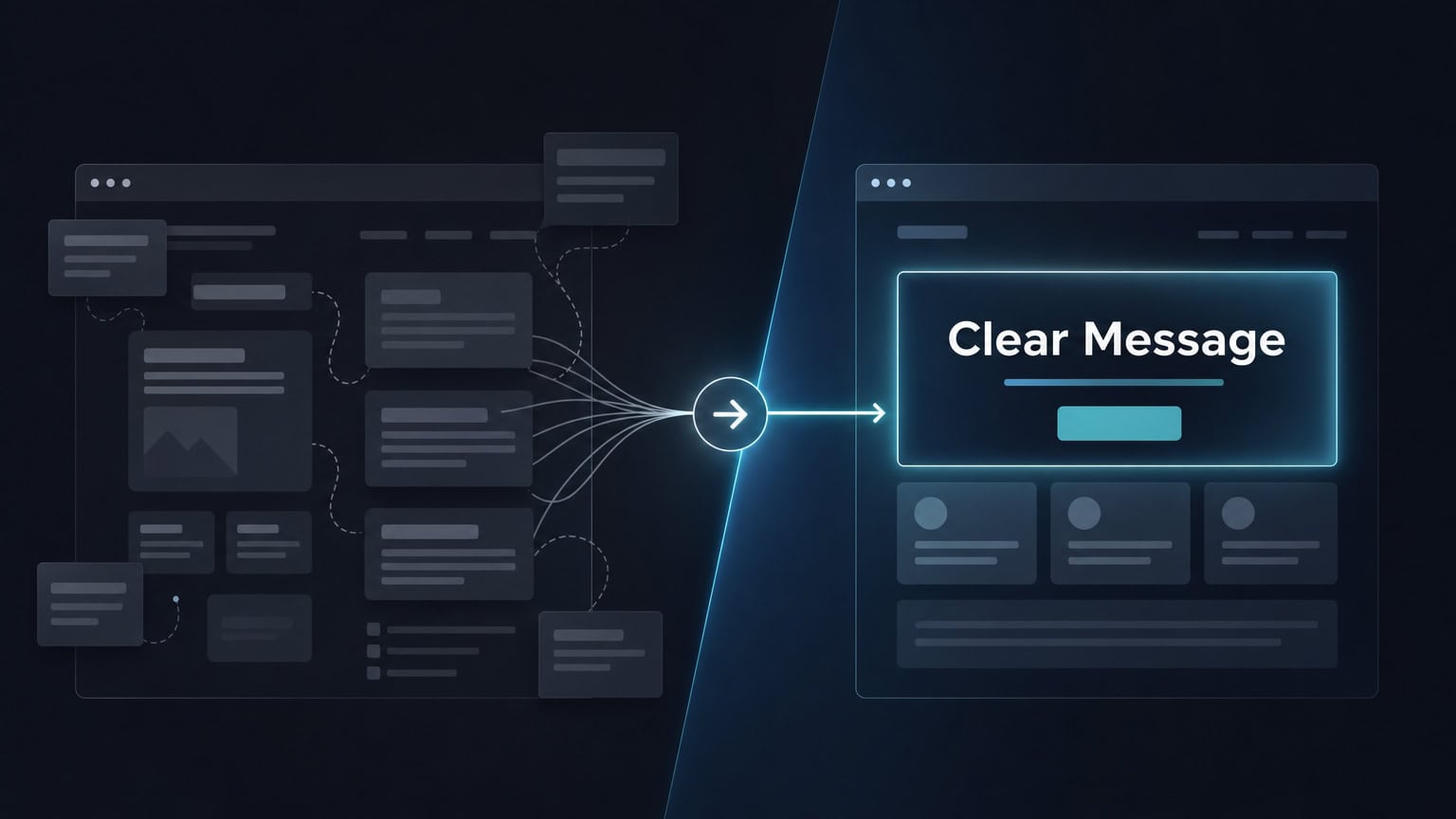
Clear messaging makes the rest of your website work harder.
Design matters. Speed matters. SEO matters. But messaging gives all of those things a job.
When your message is clear, visitors can move through the website with more confidence. They understand why they should keep reading, which service fits their need, and what action makes sense from there.
That is what turns a website from an online brochure into a tool that supports real business outcomes.
Good messaging does not make people work to understand you.
It makes the value clear enough that taking the next step feels natural.
What clearer website messaging can do
The goal is not to say more. It is to say the right things in the right order.
It helps the right people recognize themselves.
Visitors should quickly understand whether your offer is built for someone like them.
It turns services into outcomes.
Instead of only explaining what you provide, clear messaging shows customers what changes when they choose you.
It gives people a reason to trust the next step.
Better structure and clearer language reduce hesitation when it is time to order, book, inquire, or buy.
It makes marketing more effective everywhere else.
When your website has a clear story, social content, SEO, ads, and email have a stronger place to send people.
Start with the pages that matter most.
You do not have to rewrite your entire website at once. Start with the pages where customers make decisions.
Your homepage should make your value obvious. Your core service, menu, product, or booking pages should make choices easier. And your calls to action should tell people exactly what happens next.
If those pieces are working together, your existing traffic has a much better chance of becoming inquiries, sales, bookings, and repeat customers.
The takeaway
Before you assume your website needs more traffic, take a closer look at what happens after people arrive.
If visitors cannot quickly understand what you do, why it matters, and what they should do next, traffic is not the first thing to fix.
Clearer messaging helps the right people stay longer, trust faster, and move toward action with less friction.
Your website does not need to say everything. It needs to make the right next step feel obvious.