Customers do not need much friction to leave.
If your website feels polished but your ordering flow suddenly looks different, loads awkwardly, asks too much, or feels like it sent them somewhere else entirely, confidence drops fast.
And once that confidence drops, so do conversions.
Ordering should feel like part of the same brand experience.
The handoff from browsing to ordering should feel natural. When it feels disconnected, customers pause, second guess, or leave altogether. In a lot of cases, they were ready to buy. The experience just gave them a reason not to.
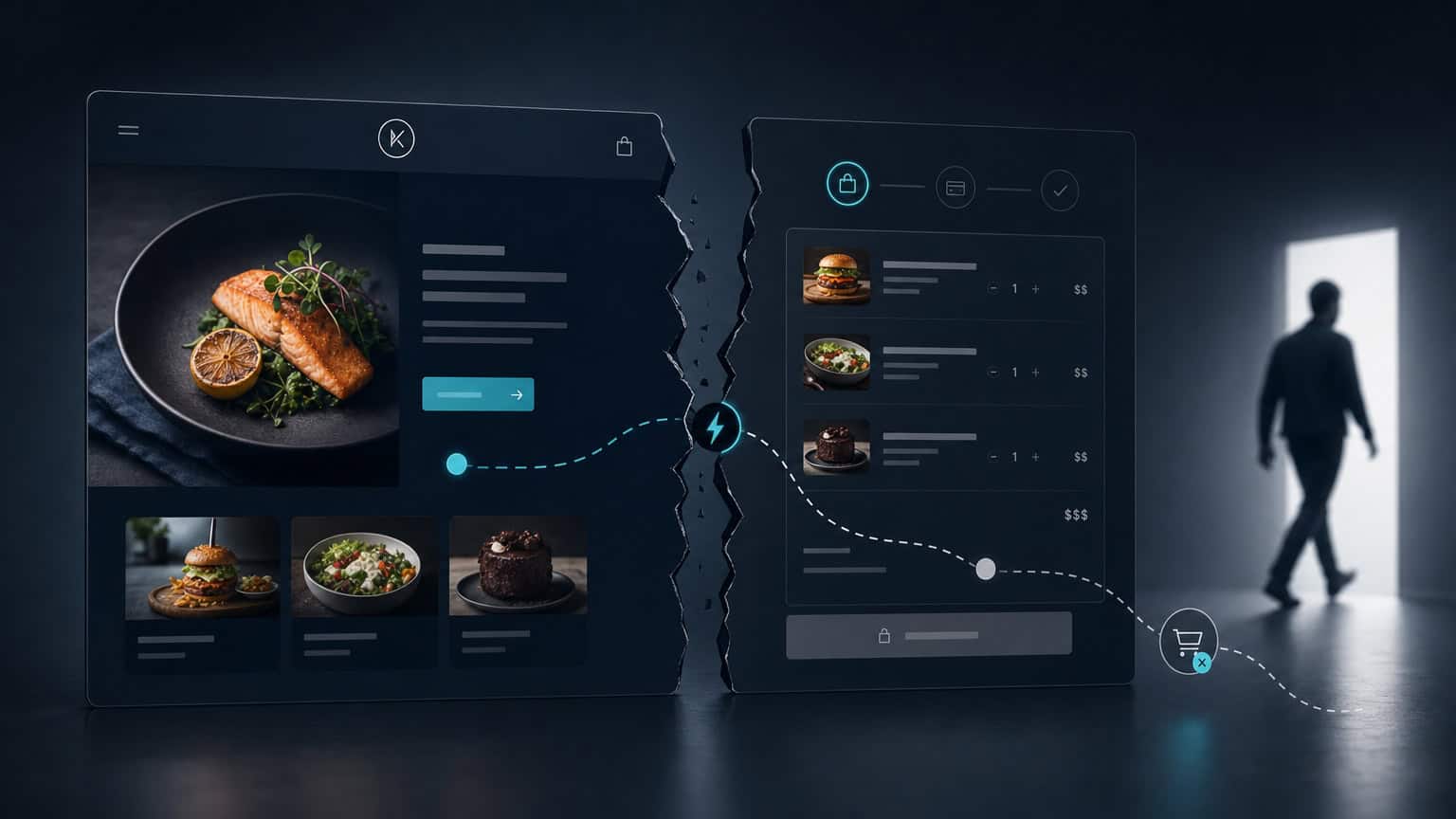
A disconnected ordering flow creates doubt at the worst possible moment.
The closer someone gets to taking action, the more important clarity becomes. If they click to order and suddenly land in a different-looking system, face confusing steps, or are not sure they are still in the right place, momentum breaks.
That break matters more than most businesses realize.
People do not always abandon because they changed their mind. Sometimes they abandon because the experience stopped feeling smooth, trustworthy, or worth the effort.
What disconnected ordering usually looks like
A visual jump
The customer moves from a polished website into an ordering page that feels off-brand, outdated, or unfamiliar.
An awkward handoff
The transition into ordering feels abrupt, with little context, unclear buttons, or too many redirects.
Confusing menu or product structure
Customers cannot quickly find what they want, customize it easily, or understand how to complete the order.
Mobile friction
Buttons feel cramped, layouts break, or checkout becomes frustrating on the device most people are actually using.
Why this matters more than it seems
Online ordering is not just a utility. It is part of the customer experience.
If someone is hungry, in a hurry, comparing options, or placing a repeat order, they are not looking for an experience they have to figure out. They are looking for a fast, obvious path to completion.
When ordering feels disconnected, the brand loses some of the trust it worked hard to build up front. And that trust tends to disappear right when the sale should be easiest to close.
The goal is not just to offer online ordering. It is to make ordering feel seamless.
When the path from landing page to checkout feels connected, customers move with more confidence and less hesitation.
What a better ordering experience does
A stronger ordering flow helps customers stay in motion. It reduces uncertainty, removes extra thinking, and keeps attention where it should be: on completing the order.
It reinforces trust
The customer feels like they are still inside one cohesive brand experience.
It reduces hesitation
Cleaner paths, clearer choices, and better structure make it easier to keep going.
It supports mobile behavior
Customers can move from craving to checkout quickly, without friction or confusion.
It protects conversions
The demand is already there. A smoother experience simply helps more of it turn into revenue.
This is where design, systems, and operations start to overlap.
Businesses often think of online ordering as a technical setup. But to the customer, it is a brand moment.
That means the experience should not just function. It should feel intentional. It should match the website, support the way people actually order, and connect cleanly to the systems behind the scenes.
When that alignment is there, ordering feels easier for customers and more manageable for the business.
The takeaway
If customers are dropping off before checkout, the problem is not always demand. Sometimes the issue is that the ordering experience feels disconnected from everything that brought them there.
The businesses that convert better online usually make the whole journey feel connected, from the first visit to the final click.
Because when ordering feels easy, familiar, and on-brand, more customers follow through.
A smoother ordering experience does more than improve usability. It protects trust at the exact moment customers are ready to act.